SERVICES OFFERED
URINARY CONDITIONS
What are urinary disorders?
The urinary tract is made up of the urethra, ureter, kidneys and bladder that play an essential role in the release of toxins. However, urinary disorders can affect this integral filtration process and cause pain and sexual dysfunction.
What urinary conditions should I be on the lookout for?
Disorders that affect the way in which the urinary system functions include incontinence, urinary tract infections and renal failure.
Other conditions are:
Haematuria
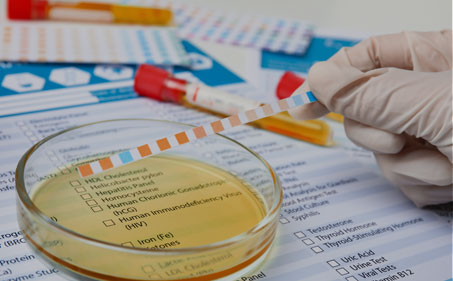
Haematuria leads to blood in urine which is macroscopic or microscopic. Sometimes small droplets can only be seen under a microscope. Haematuria typically occurs due to urinary and kidney infections, kidney stones, an enlarged prostate, kidney disease, and prostate cancer. Haematuria is a symptom of an underlying condition that must be treated first to stop blood in the urine. A urine test, cystoscopy, CT, and MRI scan can help identify the cause of haematuria. Normally, Dr Ras prescribes antibiotics to treat a urinary tract infection and medication to reduce the size of an enlarged prostate and shockwave lithotripsy to break apart large kidney and bladder stones.
Kidney Stones
Kidney stones are made from crystallised chemicals found in urine. These stones are so dangerous that they can grow, similar to stalactites in a cave. Unfortunately, you may be unaware that you have kidney stones when they remain dormant in the kidneys. Instead, kidney stones are often stumbled upon by chance. Usually, stones are detected by x-ray when screening for another condition. Ureteric colic, which is extreme pain from kidney stones, occurs when the stones travel down the kidney to the bladder. You may also experience pain in the loin and microscopic haematuria (bleeding seen under a microscope).
There are several ways to surgically remove kidney stones through high-frequency sound waves to break the stones apart (shockwave lithotripsy), surgery to dissect large kidney stones and removal of the stones by means of scope and parathyroid gland surgery.
Testicular Pain and Swelling
Orchitis refers to swelling in the testicles that affects one or both testes. A swollen testicle may occur due to a bacterial or viral infection or, in some cases, a sexually transmitted infection (STI). Swollen and painful testicles could occur due to infection, injury or cancer.
Testicular torsion and cancer cause testicular pain. As a result, both conditions require emergency surgery. Testicular de-torsion is surgery to unravel the twisted spermatic cord and increase the flow of blood to the testicles. Surgery to treat testicular cancer involves removing the affected testicle. Then, the testicle is sent for further tests to ensure doctors have eradicated cancer cells.
FAQ
What causes blood in semen?
Blood in semen, a condition your urologist refers to as Hematospermia that could arise from a number of conditions such as inflammation of the seminal vesicles, prostate and urethra, a seminal tract infection, a disorder targeting the blood, urological surgery and prostate or testicular cancer.
What should I do if I think I have kidney stones?
When a kidney stone approaches the entrance of the bladder, you may feel as if your bladder is full even though no fluid needs to be passed. A kidney stone that irritates the bladder’s base causes:
- Pain when releasing urine
- Pain at the top of the penis or urethra
- Macroscopic haematuria