SERVICES OFFERED
ONCOLOGY
What is urological cancer?
Common types of cancer target the bladder, kidneys, ureter, penis, prostate and testes and fall within a urologist's ability to treat the disease. If caught early, Dr Ras can prevent the rapid progression of the disease into advanced-stage cancer.
What does oncological surgery involve?
There are several procedures to treat cancers that affect different parts of the urinary system, such as:
Surgery to treat kidney cancer
A nephrectomy aims to remove a portion of the kidney affected by cancer or the whole kidney and the adrenal gland and tissue. Sometimes a partial nephrectomy is a better option when the tumour is small and only affects a certain part of the kidney. The surgery is often considered because healthy kidney tissue can still be preserved.
Surgery, immunotherapy, chemotherapy and radiation therapy are used to eradicate the cancer cells completely.
Treatment for Bladder Cancer
Intravesical (localised chemotherapy) is delivered directly to the bladder by means of a catheter. Chemotherapy drugs are used to destroy active cancer cells that can grow if neglected. Intravesical therapy is performed to treat early-stage cancer confined to the bladder lining. Medication can be delivered intravenously to treat an advanced stage of bladder cancer.
Cancer of the Ureter
Cancer of the ureter (ureteral cancer) occurs due to a rapid cellular mutation inside the tubes (ureters) that conjoin the kidneys to the bladder. Treatment for early-stage ureteral cancer involves the surgical removal of a portion of the affected ureter. An advanced form of ureteral cancer can be treated by removing the ureter, kidney, and bladder sections.
Chemotherapy or immunotherapy can treat an advanced stage of ureteral cancer.
Cancer Affecting the Penis
Penile cancer is best treated when found in its early stages. Although rare, penile cancer arises from the rapid growth of active cancer cells in the penis skin or tissues of the penis. Penile cancer can be divided into two groups: invasive and non-invasivepenile cancer. Non-invasive penile cancer means cancer has not penetrated the deep tissues of the penis and lymph nodes. Non-invasive penile cancer can be treated through circumcision, laser therapy, cryosurgery, chemotherapy, radiation therapy and immunotherapy.
An advanced form of penile cancer can be treated through the excision of the tumour, Mohs surgery which entails the removal of minimal tissue and all the cancer cells and a partial penectomy, which is surgery to remove a portion of the penis if the tumour is small. A total penectomy is the removal of the entire penis.
Prostate Cancer Treatment
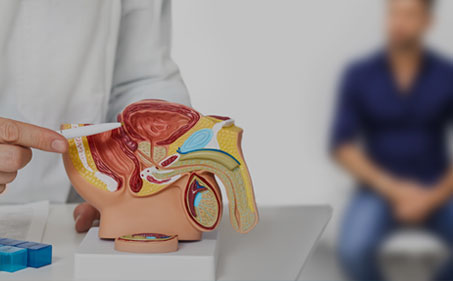
Prostate cancer develops in the prostate, a gland described as walnut-sized and found between the penis and bladder. Dr Ras can closely monitor cancer by performing regular prostate-specific antigen (PSA) tests and biopsies. However, should cancer grow or symptoms develop, Dr Ras will have to perform surgery. A prostatectomy is a procedure that entails the removal of the prostate and nearby tissue. Brachytherapy, a form of radiation therapy, is targeted or localised therapy involving the insertion of radioactive seeds into or near the cancer site to eliminate the malignant cells. Alternatively, he can consider additional forms of treatment such as cryotherapy, chemotherapy and hormone therapy.
Cancer of the testes
Testicular cancer arises in the testicles, which are found inside the scrotum. Fortunately, testicular cancer is one of the most treatable cancers, even when the disease migrates beyond the testicle.
Radical inguinal orchiectomy is surgery to dissect the affected testicle, a common procedure for all stages of testicular cancer. An incision over the groin serves as an opening to remove the testicle.
Retroperitoneal lymph node dissection is the removal of nearby lymph nodes that have been affected. The surgical dissection of the lymph nodes is done through an opening in the abdomen. Again, Dr Ras is careful to avoid interfering with surrounding nerves.
What can you expect in the postoperative phase?
Regular follow-ups are an important part of recovery because, during these health checks, Dr Ras can determine how well you respond to treatment. Reconstructive surgery, especially after treating penile cancer and the use of a prosthetic (mock testicle filled with saline) after the surgical removal of the testicle, are options Dr Ras is willing to discuss with his patients.
Recovery depends on the procedure undergone and is a unique experience for each individual. After a radical cystectomy, you will have to take medication to relieve pain for several weeks. After that, it can take four to six weeks to begin emptying your bladder normally.
FAQ
Can damaging nerves during a retroperitoneal lymph node dissection interfere with my ability to achieve an erection?
Sometimes damage to nearby nerves is unavoidable and can affect ejaculation. However, you will still be able to get an erection.
Why do you perform a radical cystectomy?
A radical cystectomy is the surgical resection of the bladder. In male patients, the prostate and seminal vesicles are also removed. For women, in addition to the bladder, Dr Ras removes the ovaries, uterus, fallopian tubes and a portion of the vagina.
Does it take long to recover from prostate cancer surgery?
It can take a minimum of eight weeks to recover from surgery. You will need to spend several days overnight in the hospital.